Patient guide
What a dental filling is and when you need one
A dental filling repairs a tooth where decay has destroyed part of its structure: the damaged tissue is removed and the cavity is filled with a material that gives the tooth back its shape and function. We work with tooth-coloured composites, so the repair is not on show when you talk or smile.
You need one when decay has gone through the enamel and is advancing into the dentine. At that stage it often does not hurt yet, which is why it shows up at a check-up or on a digital X-ray long before it shows up in your bathroom mirror. The sooner it is treated, the less tooth has to be removed.
What a filling appointment is like, step by step
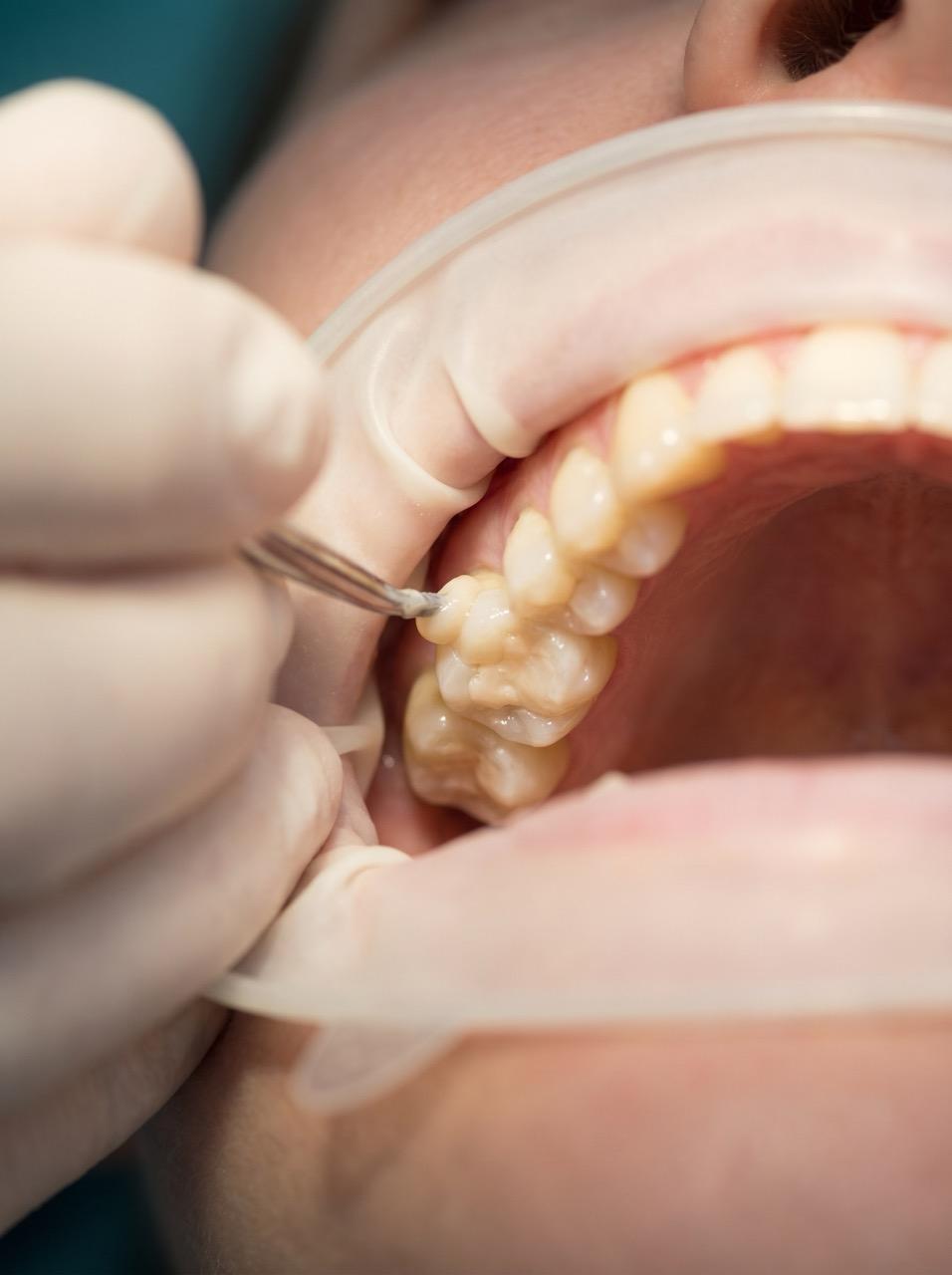
A filling is usually done in a single appointment under local anaesthesia, so you will not feel pain during the procedure. Beforehand we locate the decay with the intraoral scanner and digital X-ray, to know exactly how far it reaches.
The decayed tissue is then removed, the tooth is isolated so it stays dry, the composite is placed in layers and the bite is adjusted until you bite comfortably. It is polished at the end: that is what stops the material trapping plaque at the margin.
- Diagnosis with 3D intraoral scanner and digital X-ray.
- Local anaesthesia adapted to the area being treated.
- Decay removal and isolation of the tooth.
- Layered composite, bite adjustment and final polish.
Filling, restoration or root canal: where the line is
The line is drawn by how much healthy tooth is left and whether the nerve is involved. If the decay has stayed within enamel and dentine, a filling is enough. If it has destroyed a large part of the crown, we are talking about a restoration: the same material, but rebuilding the anatomy of the tooth as well.
When decay reaches the nerve, a filling no longer solves the problem: what is called for is a root canal and then a rebuild. That line is visible on the X-ray and at the examination, and we show it to you on screen before anything is decided.
How long a filling lasts and what makes it last longer
A well-made high-end composite filling usually lasts 7 to 10 years, though it depends on its size, where the tooth is and on your hygiene. A large filling in a molar works far harder than a small one in a front tooth.
What shortens its life most is bruxism, irregular hygiene and skipping check-ups: leakage at the margin is spotted at a check-up long before it causes symptoms. If you grind at night, it is worth assessing a night guard to protect the work already done.
Conservative dentistry in central Granada
Conservative means exactly that: keeping as much natural tooth as possible. It is the minimally invasive approach we work with at our clinic in central Granada, and the reason we insist so much on catching things early.
The first visit and the digital diagnosis are free, and you leave with a plan and a fixed quote. You can book by phone on +34 958 11 24 37, on WhatsApp at +34 628 41 66 01, or take a slot yourself in our online calendar.