Patient guide
What bruxism is and why it appears
Bruxism is the involuntary habit of clenching or grinding your teeth, almost always at night and without being aware of it. It is not a disease of the teeth: it is activity of the chewing muscles that ends up taking its toll on enamel, joints and neck.
It is associated with very different factors — periods of stress and poor sleep quality, the way your teeth meet when you bite, certain habits — which is why the approach starts by understanding your case, not by handing you a guard and nothing else.
Signs of bruxism you can spot yourself
The most common signs are waking up with a tight jaw or head, noticing worn or sensitive teeth, someone hearing you grind at night, and persistent neck tension.
None of them is enough on its own: what confirms the suspicion is the wear pattern we see at the check-up, together with examining the muscles and the joint.
- Jaw pain or stiffness on waking.
- Headaches that start at the temples.
- Teeth with worn, flattened edges or small cracks.
- Cold sensitivity with no cavity to explain it.
- Neck tension and discomfort around the ear.
How it is treated: the custom night guard
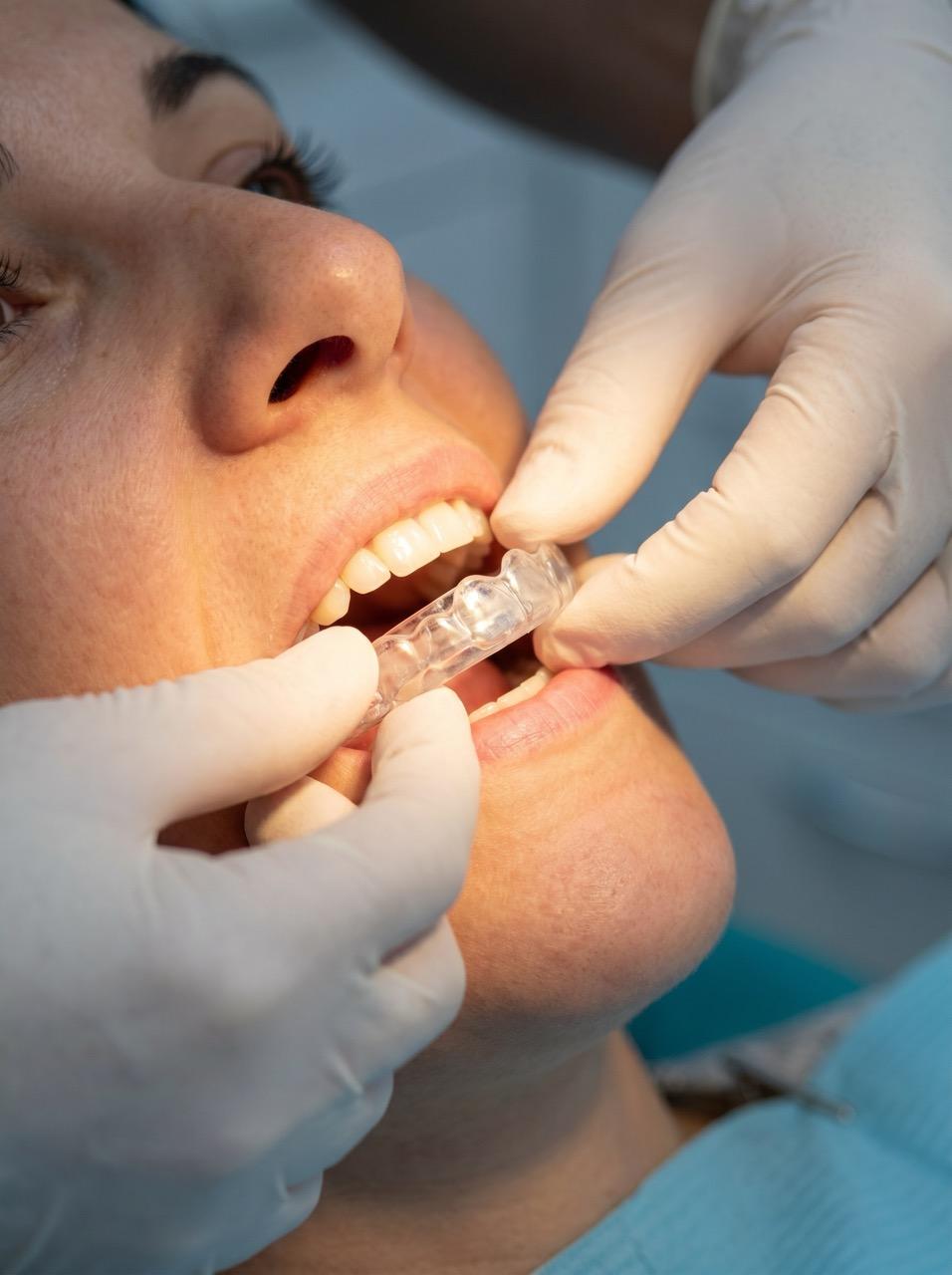
The most common treatment for bruxism is a custom-made night guard: a rigid plate worn over the teeth while you sleep so that it takes the wear instead of your enamel, and so the muscles can relax.
Custom means custom. We design it from a digital scan of your mouth, deliver it fitted and review it in the clinic: a guard that does not fit properly, or that does not unload where it should, can be uncomfortable and fail to do its job. That is the main difference from the ready-made guards sold off the shelf.
What the first days are like and how to look after it
The first days with a night guard are usually about adapting: you feel the bulk, falling asleep takes a little longer and you may salivate more. That is common and eases with continued use.
After that, upkeep is simple: clean it every morning, store it dry and bring it to your check-ups so we can verify fit and wear. With proper use and cleaning, a custom guard usually lasts several years. If it starts to feel different, if one spot bothers you or if it looks heavily marked, bring it in and we will check it.