Patient guide
What a root canal is and why it saves the tooth
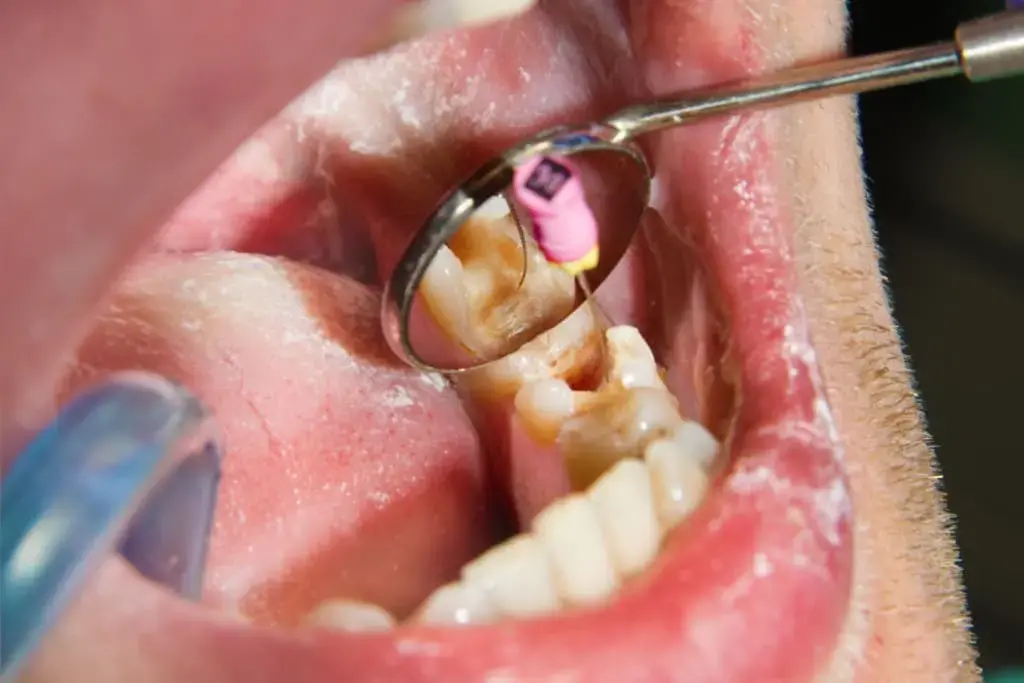
A root canal treatment removes the tissue inside the tooth when decay or trauma has reached the nerve, cleans and shapes the canals and seals them so it cannot become infected again. It is what makes it possible to keep the tooth instead of extracting it.
At MiD it is done under local anaesthesia, with magnification and modern instrumentation. The tooth no longer has a nerve, but it is still yours: it keeps its root, the bone around it and its place in your bite, which is exactly what is lost with an extraction.
Signs the nerve may be affected
The most typical warning is pain that no longer depends on a trigger: it comes on by itself, flares at night and does not ease as it used to. Also exaggerated sensitivity to heat, pain on biting, or noticing the tooth has changed colour.
None of those signs on its own confirms that a root canal is needed. What determines it is the examination together with the digital X-ray, which shows the state of the canal and of the bone around the root. If the pain is keeping you awake, do not wait for a check-up: call us.
What the treatment is like, session by session
It is usually resolved in one or two sessions. The exact number depends on the tooth, how many canals it has and the state of the infection, and we confirm it after the X-ray, not before.
Some discomfort on biting can remain over the following days and gradually eases. If instead of easing it gets worse, we would rather you called than waited for the next appointment.
- Diagnosis with digital X-ray and local anaesthesia.
- Access to the tooth and cleaning of the canals with specific instruments.
- Sealing of the canals to prevent a new infection.
- Rebuilding the tooth and, if little healthy tooth remains, a crown.
After the root canal: why a crown is often needed
A root-treated tooth is more fragile, because it has lost tissue both to the decay and to the access made to the canal. That is why treatment does not end at the sealing: it ends when the tooth is rebuilt and spreads the force of your bite properly again.
When enough healthy tooth remains, a composite restoration is enough. When little remains, a crown is what is called for: it wraps the tooth and protects it from fracture. It is assessed case by case and explained to you beforehand.
Root canal specialists in Granada: when a case needs more detail
Not all root canals are the same. There are calcified canals, curved roots and retreatments of a previous root canal that did not go well. When a case calls for that level of detail, it is planned that way from the start rather than forced.
And the tooth cannot always be saved: some fractures and losses of support make it unviable. If that is your case, the honest thing is to say so and set out the alternatives. We are in central Granada, Monday to Thursday 9:30 am to 1:30 pm and 4:30 pm to 8:30 pm, and Friday 9:30 am to 1:30 pm.