Patient guide
What a professional dental cleaning in Granada includes
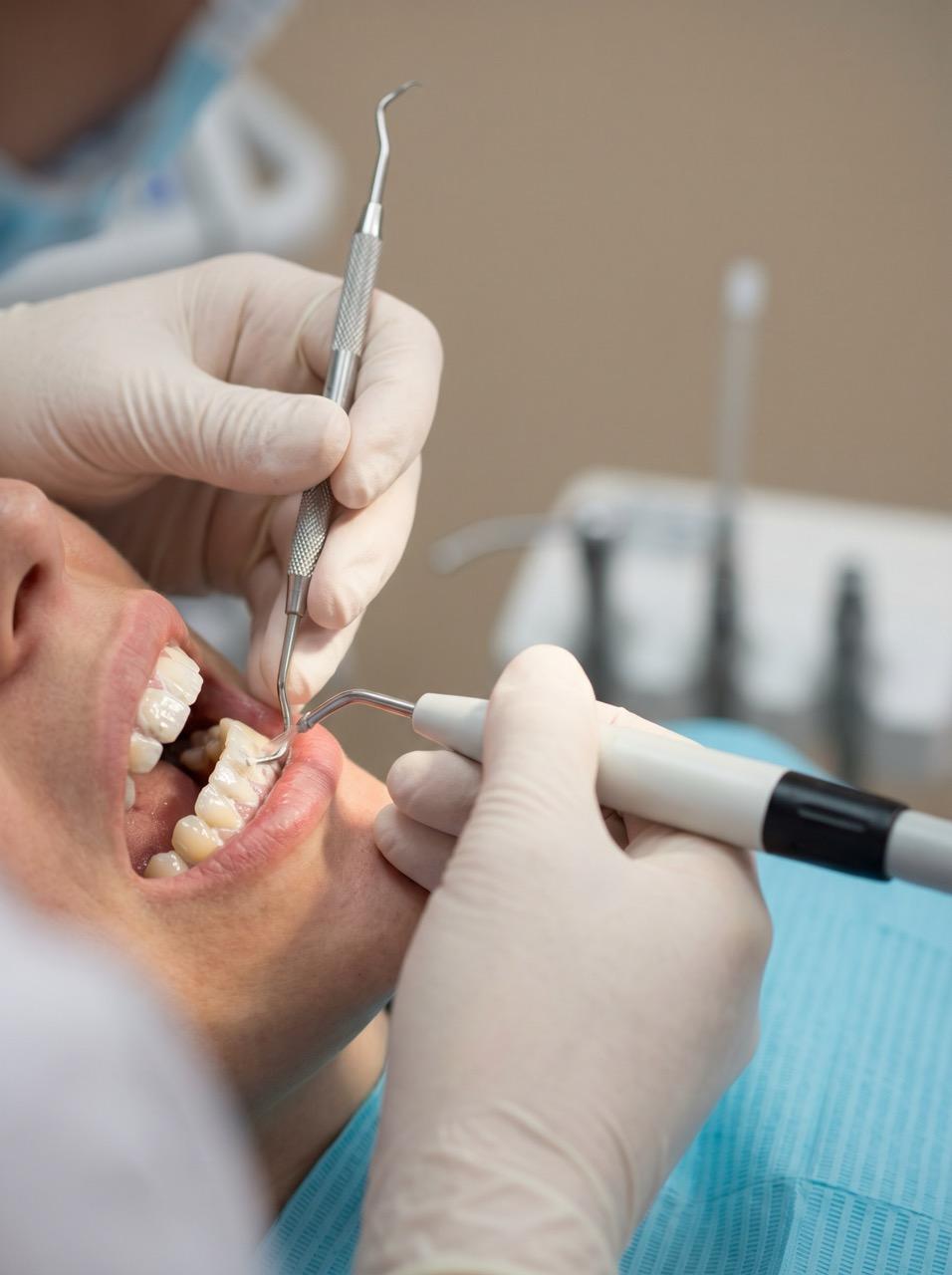
A professional dental cleaning removes the plaque and tartar that brushing can no longer reach, polishes the tooth surface and checks the condition of your gums. At MiD we do it in central Granada and it always starts with a periodontal probe assessment, because what each mouth needs follows from that.
Tartar is dental plaque that has mineralised and stuck to the tooth: that is why it does not come off with brushing at home. Removing it with ultrasonics and leaving a smooth surface means it takes longer to build up again.
- Initial assessment of gums and teeth with a periodontal probe.
- Removal of supragingival tartar with ultrasonics.
- Polishing for a smooth finish.
- Personalised advice on brushing, floss and water flossers.
A cleaning and deep scaling are not the same thing
A dental cleaning works above the gum line; scaling and root planing works below it, when gum disease is already present. They are different treatments with different aims, and which one you need is decided by looking at the real state of your gums.
If the assessment shows periodontal pockets, persistent bleeding or recession, gum treatment is what is called for, not just a hygiene appointment. You can read how we approach it on our periodontics and gum treatment page in Granada.
How often a dental cleaning makes sense
Once a year is the usual pattern. If you smoke or tend to build up tartar, every six months is reasonable, and we will tell you so at your check-up.
The interval is not the same for everyone: genetics, tobacco, saliva, ongoing orthodontics or a previous gum problem all matter. That is why we prefer to adjust it to your case rather than give one figure for everybody.
What it feels like during and after
Most patients describe a cleaning as occasional discomfort rather than pain, mainly from the ultrasonic vibration and the cold water. If your gums are inflamed or you have marked sensitivity you will feel it more, so tell us and we will take it slower.
Over the following days some sensitivity can appear and gums may bleed slightly when brushing if they were inflamed; this usually settles as they recover. Feeling more space between your teeth is also common: that is the tartar no longer filling it.